
At Wright Orthodontics, Dr. Marc S. Wright looks at how the jaws, palate and bite affect breathing, in addition to how the teeth line up. Airway function is part of every comprehensive exam at our Atlanta and Marietta offices. When a narrow upper jaw, a crossbite or an oral habit is limiting airflow, orthodontic treatment at the right age can widen the arch, guide jaw growth and support better nasal breathing and sleep.

Signs It May Be Time for an Airway Evaluation
Airway problems usually develop slowly, so families get used to them and stop noticing. Talk with us if you see any of these in your child or yourself:
- Snoring, noisy breathing or restless sleep
- Mouth breathing, especially during sleep
- Dark circles under the eyes or tiredness during the day
- Trouble focusing or behavior concerns at school
- Chronic nasal congestion or allergies
- A small or narrow upper jaw, a crossbite, or crowded baby teeth
- Thumb sucking past the toddler years, a tongue thrust, or speech and swallowing challenges
- In adults: morning headaches, jaw (TMJ) discomfort, open-mouth posture, or orthodontic results that have shifted since childhood
One sign on its own does not mean something is wrong. Several together are a good reason to schedule an evaluation.
What Is Airway Orthodontics?
Traditional orthodontics straightens teeth and corrects the bite. Airway orthodontics asks a second question: how are the teeth, jaws and tongue posture affecting the way a patient breathes?
A narrow upper jaw leaves less room for the tongue and less space in the nasal passages above it. A recessed lower jaw, chronic mouth breathing or a tongue thrust can have similar effects over time. These patterns are linked to snoring, sleep-disordered breathing and poor sleep, which then show up during the day as low energy, trouble concentrating and irritability.
Our approach is to find the structural cause, correct what orthodontics can correct, and involve the right medical specialist for anything outside our scope.
How We Evaluate the Airway
Every airway evaluation starts with a conversation about sleep, breathing habits and health history. Dr. Wright then examines the jaws, palate, bite, tongue posture and facial structure.
Our iTero Lumina scanner captures a detailed 3D model of the teeth and bite in minutes, with no messy impressions. For more complex cases, our cone-beam CT (CBCT) scanner provides a 3D view of the teeth, jaws and facial structure, and it is one of the tools we use to evaluate airway health. This safe, low-radiation imaging shows details that traditional X-rays cannot.
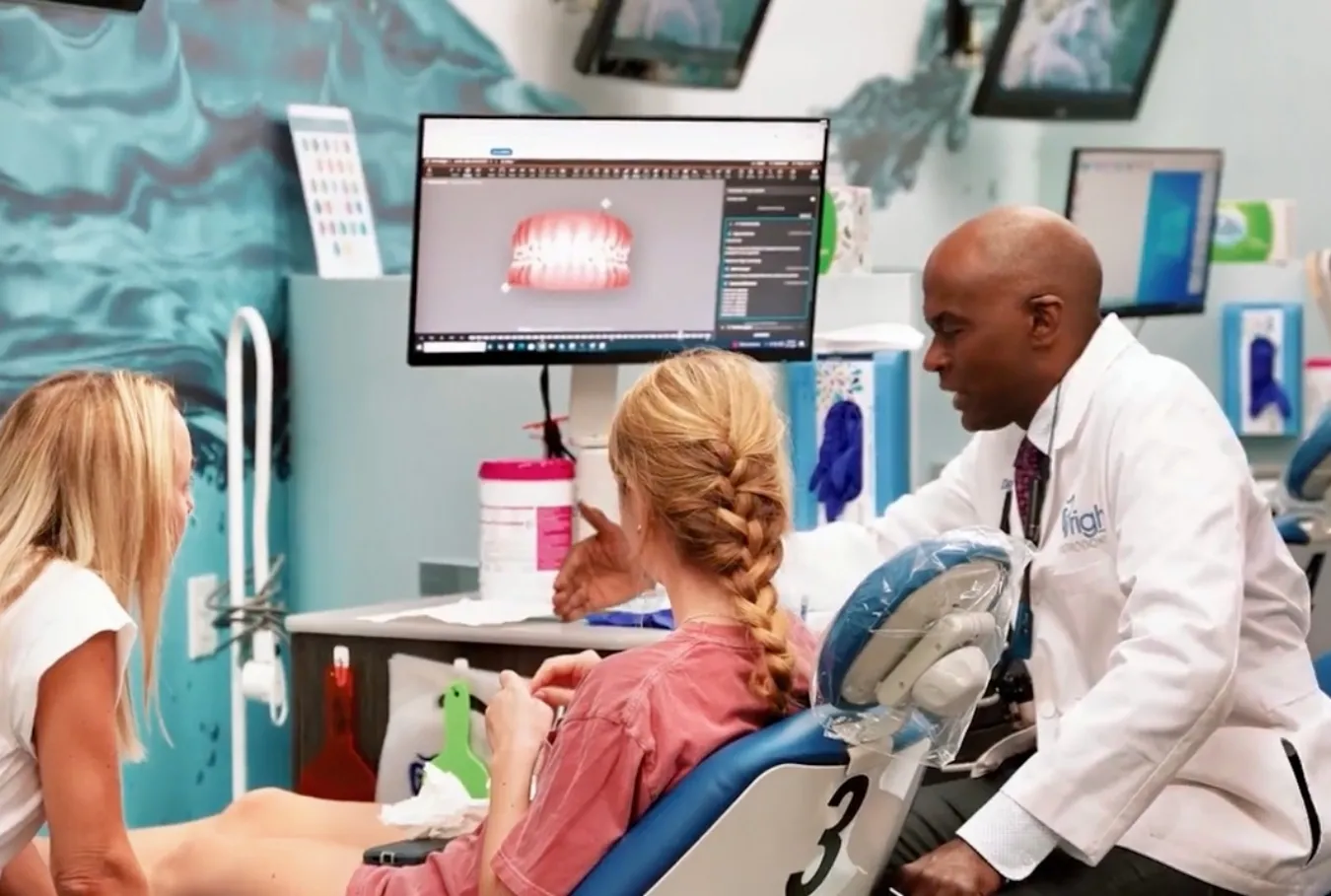
After the exam, Dr. Wright walks you through what he found, what orthodontic treatment can help with, and whether another provider should take a look.
Our Airway-Focused Treatments
Palatal Expanders
For young patients with a narrow upper jaw or a crossbite, a palatal expander is a gentle, effective solution. The device gradually widens the upper arch, which creates room for permanent teeth to come in properly and improves nasal airflow. Expansion works best during childhood, while the upper jaw is still developing.
Invisalign Palatal Expanders
For families who prefer a bracket-free option, Invisalign palatal expanders offer a discreet and comfortable alternative to a traditional expander. These clear, aligner-based devices gently guide jaw development while keeping the look of Invisalign.
Early (Phase One) Treatment
Some airway concerns are best addressed before all the permanent teeth arrive. Phase One of two-phase treatment usually takes place between ages 7 and 10 and may involve expanders, limited braces or Invisalign First. Guiding jaw growth at this stage can reduce the need for tooth extractions or jaw surgery later and makes the second phase shorter.
Braces and Clear Aligners
Once the jaws have the right width and position, braces or Invisalign align the teeth and support proper jaw positioning. For adults, braces or aligners can be paired with expansion techniques and other therapies to help restore proper breathing and bite alignment.
Habit Correction and Myofunctional Therapy
Habits such as thumb sucking, tongue thrust and mouth breathing can work against both the airway and orthodontic results. We help patients and parents break these habits, and when the muscles of the mouth and face need retraining, myofunctional therapy may be recommended alongside orthodontic treatment.
Coordinated Care With Your Medical Team
Some breathing problems have causes outside orthodontics, such as enlarged tonsils or adenoids, nasal obstruction or a suspected sleep disorder. In those cases airway care becomes a team effort, and we coordinate with pediatricians, ENT specialists and sleep medicine professionals so treatment happens in the right order.
Airway Care at Every Age
Children (Age 7 and Up)
The American Association of Orthodontists recommends a child’s first orthodontic check by age 7. At that age the jaws are still growing, so Dr. Wright can widen a narrow palate, correct a crossbite and address habits like mouth breathing before they become harder to treat. Early detection usually means simpler, less invasive treatment.
Teens
A teen who snores, wakes up tired or struggles to focus in class may have a breathing problem that no one has connected to their bite. Treatment during the teen years can still correct many structural issues. Whether expansion is an option depends on how much growth remains, which Dr. Wright checks at the exam.
Adults
Jaw growth is complete in adults, but airway-focused treatment can still help. Many adults come to us after years of poor sleep, daytime fatigue, TMJ discomfort, headaches or orthodontic results that relapsed after childhood braces. Adult treatment may combine braces or aligners with expansion techniques and care from other specialists to improve breathing, sleep and bite alignment.
Benefits of Airway-Focused Orthodontic Care
- Easier nasal breathing and less mouth breathing
- Better sleep quality, especially in children
- Improved focus and behavior during the day
- Guided jaw growth that gives permanent teeth room to come in
- Less need for extractions or jaw surgery later on
- Healthier, more stable long-term results
For Referring Dentists, Pediatricians and ENTs
If you notice a narrow palate, a crossbite, mouth breathing or other airway signs in one of your patients, we welcome your referral. Dr. Wright will evaluate the patient at our Atlanta or Marietta office and coordinate with you on next steps. You can send a referral through our Refer a Patient form or call us at (404) 417-0771.
Why Families Choose Wright Orthodontics for Airway Care
Dr. Marc S. Wright earned his Doctorate of Dental Surgery and completed his postgraduate specialty training in orthodontics at Howard University. He is a member of the American Association of Orthodontists and has cared for Georgia families for many years, with ThreeBest Rated naming him one of the top three orthodontists in Atlanta.
Airway screening is built into every comprehensive exam, and our in-office CBCT imaging means most of the diagnostic work happens under one roof. Families from across the metro area see us at our Atlanta office on North Druid Hills Road and our Marietta office on Whitlock Avenue.
Schedule a Free Airway Consultation in Atlanta or Marietta
If you have noticed snoring, mouth breathing or restless sleep in your child or yourself, an evaluation is a simple first step. Request your free consultation or call or text (404) 417-0771.
- Atlanta: 3019-B North Druid Hills Rd. NE, Atlanta, GA 30329
- Marietta: 990 B Whitlock Ave. NW, Marietta, GA 30064